Combat Box
Designer · Fabricator · Project Lead
A reusable test environment built because the teams I mentored needed somewhere safe to find out what their robots would do before a competition.
Structure
Designed around 1/2-inch polycarbonate panels obtained through sponsorship, with a structure intended to handle repeated testing rather than one-off demonstration use.
Build
This was a different kind of engineering from the metalworking I normally did: woodworking, structural planning, fabrication, assembly, and safety all mattered.
Why it mattered
The box gave the club a controlled place to test small robots and a foundation that could be reused as larger teams and machines came through the program.
Build gallery
Recovered images from the original project page, preserved here alongside the write-up.
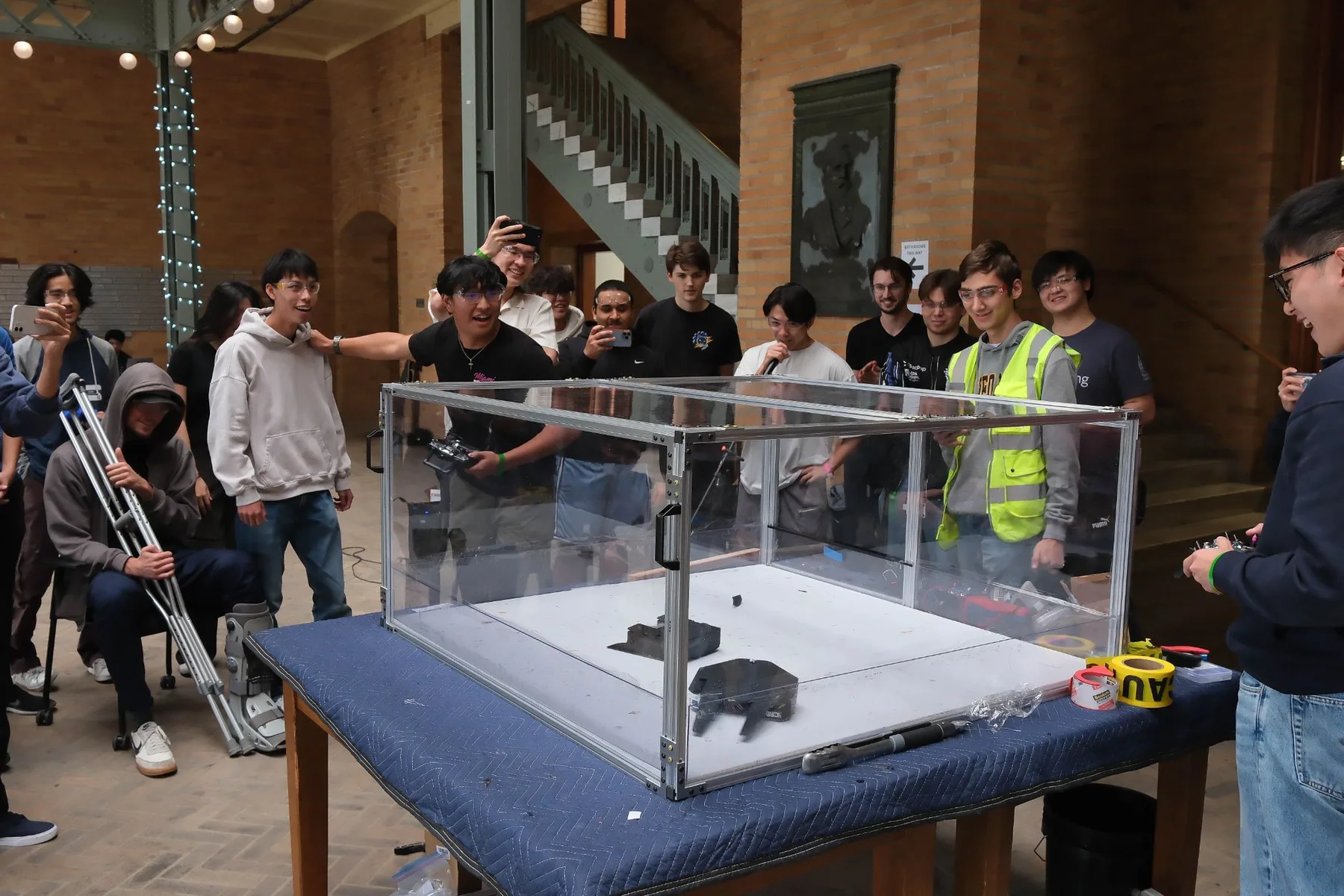
Combat Box — Original portfolio notes
I have extensive experience working in both wood and metal shops, much of which can be seen in projects like Cars and Lathes. However, at Berkeley, opportunities for hands-on woodworking projects are more limited. One notable exception was the combat box project, where I was partnered to take the lead.
This project allowed me to apply my woodworking and fabrication skills to create a robust, precise design. Taking the lead involved planning the build, ensuring structural integrity, and collaborating closely with my teammate to meet the project's technical and safety requirements.
This combat box was estimated to weigh over 300 pounds, thanks to a sponsorship I secured for 1/2-inch polycarbonate panels used on all sides. The robust design ensures safety and durability, making it an excellent solution for rigorous testing and competitions. Leading this project reinforced the importance of resourcefulness and attention to detail in engineering.
The box was initially used for 1lb competitions, providing a safe and controlled environment for teams to test their designs. Moving forward, it will also serve as a test box for larger robots, demonstrating its versatility and long-term value to the UC Berkeley robotics community.